
Butterfly koi
Key facts: Butterfly koi (ヒレナガニシキゴイ, hirenaga nishikigoi), also known as longfin koi or dragon carp, are koi notable for elongated, flowing fins, developed in the 1980s from crosses with long-finned Indonesian carp[1][2].
Colors:
Butterfly koi are a form of ornamental carp distinguished primarily by their greatly extended finnage rather than by a specific color pattern[1]. They are also called longfin koi, hirenaga (ヒレナガ), onaga, tenaga, or hagoromo, and in North America are sometimes nicknamed “American koi” because of their popularity there[3][1].According to Wikipedia, butterfly koi are a hybrid of koi with Asian carp, and both butterfly koi and ghost koi were developed in the 1980s and are considered by some commentators not to be true nishikigoi (錦鯉)[2][6]. The dealer Kodama Koi Farm notes that in Japan and among traditional hobbyist circles, butterfly koi are not as highly valued as standard short-finned koi, even though they are popular overseas[7].- hi (red)
- shiroji (white ground)
- sumi (black)
- gin (silver)
Name and meaning
In Japan the variety has been known as onagagoi or hire naga nishikigoi, translated in English as “long tail carp”[1]. Kodama Koi Farm lists several alternative Japanese names in use — hirenaga (“long fin”), onaga (“long tail”), tenaga (“long arm”), and hagoromo (“celestial robe of an angel”) — and states it uses “Hirenaga” because it is the most common term[3]. The English name “butterfly koi” is credited to Randy LeFever, son of breeder Wyatt LeFever, who suggested the fish looked like butterflies[1]. The fish are also sometimes called dragon koi[1].Judging points
- Conformation is scored against the traditionally oval koi body shape, which naturally slender butterfly koi do not match, especially when viewed from above[1]
- Fin-to-body ratio is a scored criterion, and butterfly koi fins exceed normal nishikigoi proportions by 500 to 1000 percent by design[1]
- Patterns such as Kohaku, Sanke, Showa, Utsuri and Ogon appear differently on butterfly koi than on standard koi[1]
- Fins should be solid and ideally symmetrical, without tears, according to the dealer Kodama Koi Farm[3]
- The American Koi Judges Association includes a dedicated Longfin class for show purposes[8]
History and origin
According to Wikipedia, in July 1977 the then Crown Prince Akihito visited the Saitama Prefectural Fisheries Experiment Station and suggested crossing a long-finned carp found in Indonesia (described as Cyprinus carpio var. flavipinnis) with Japanese koi[1]. Descendants are still kept in a pond in the East Gardens of the Imperial Palace[1]. Kodama Koi Farm similarly traces the fish to when Emperor Akihito was a prince, and states that many of these koi were released into the palace ponds in 1991[3]. Wikipedia’s general koi article dates the development of butterfly koi, like ghost koi, to the 1980s[2].Kodama Koi Farm reports that although Hirenaga did not gain much popularity in Japan — it believes the long, easily split or torn fins may not have suited Japanese aesthetic preferences — the variety became very popular overseas, with dedicated Hirenaga divisions at koi shows in the United States that do not exist in Japan[3]. The same source names two Niigata breeders still producing quality Hirenaga for export: Yamasan Koi Farm, which breeds many metallic Hirenaga, and Suda Koi Farm, which breeds Hirenaga crossed with Gosanke varieties such as Kohaku, Sanke, and Showa[3].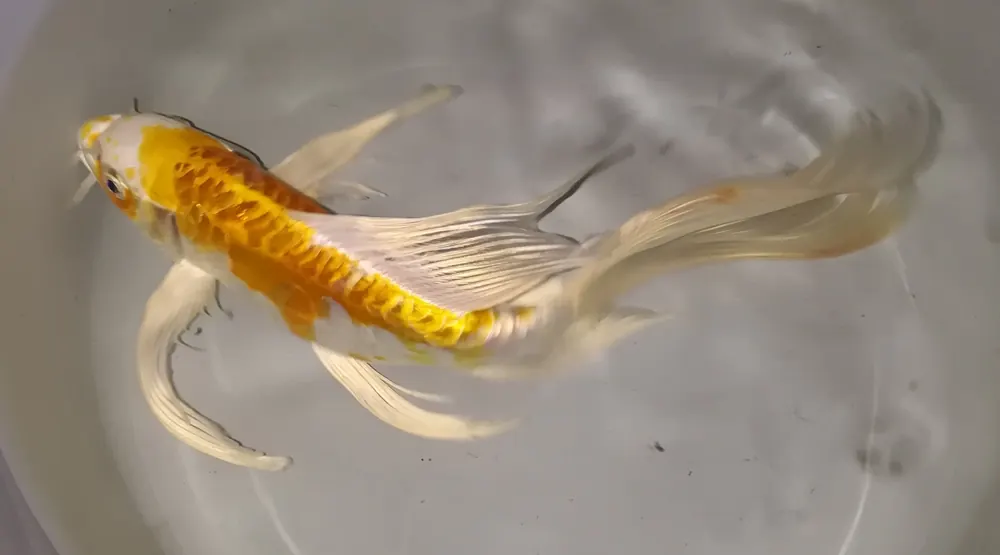

Appearance and body shape
The defining feature of butterfly koi is elongated finnage, including long pectoral, dorsal, and caudal fins that flow when the fish swims[1]. Kodama Koi Farm states that the long fins and tail should ideally be solid, without tears, and symmetrical, and that butterfly koi can have longer, more slender bodies, which is said to add to their elegance[3]. According to an article in KOI USA magazine cited by Wikipedia, this slender conformation differs from the generously oval body shape that traditional koi judging standards favor, and the difference is emphasized because judging is done from a top-down viewing angle[1].Color and pattern in butterfly koi depend on the koi stock used in crossing; breeders have produced butterfly versions of many established patterns, including Kohaku, Sanke, Showa, Utsuri, and Ogon-type metallics[1][2]. Because Hirenaga bloodlines can reportedly be introduced into any variety, Kodama Koi Farm describes the crossing as effectively doubling the number of recognized koi varieties[3].Classification at shows
The American Koi Judges Association (AKJA) lists “Longfin” as one of its recognized show classifications alongside varieties such as Kohaku, Sanke, Showa, and Doitsu[8]. American shows that permit longfin or butterfly koi generally enter them as a distinct variety class; some shows additionally offer a “Best Longfin” award split by size, such as under and over 18 inches[1].The ZNA America classification document reviewed does not list a dedicated butterfly koi or longfin category among its numbered groups, which run from Kohaku through Tancho and a general Male/all-varieties category[4].Butterfly koi compared with standard koi
Butterfly koi are a breed of common carp like standard nishikigoi, but are distinguished mainly by their elongated finnage rather than color pattern[1]. Wikipedia reports that traditional koi judging criteria, developed over many years specifically for standard koi, do not suit butterfly koi for three reasons described in KOI USA magazine: their naturally slender body conformation differs from the ideal oval shape; their fin-to-body ratio, a scored criterion in competition, exceeds normal nishikigoi standards “by 500 to 1000 percent” by design; and their patterns, even when based on familiar varieties such as Kohaku, Sanke, Showa, Utsuri, and Ogon, appear differently than on standard-finned koi[1].For these reasons, Japan’s Zen Nippon Airinkai has for many years disallowed butterfly koi from its competitive judging, and the UK Koi Judges Association also excludes them from competition[1]. By contrast, the AKJA’s American classification list includes a “Longfin” category[8], and Wikipedia notes that the Associated Koi Clubs of America reportedly created new standards for judging butterfly koi as of June 2006[1]. Even where entered, butterfly koi entrants rarely win higher general awards and more commonly compete only within their own variety class[1].Kodama Koi Farm, a US koi dealer, frames the contrast in terms of market preference: in the United States butterfly koi are valued for their distinctive appearance, while in Japan and among traditional hobbyist circles they are not rated as highly as regular short-finned koi[7].Keeping notes
According to Wikipedia, butterfly koi are generally hardy and share similar care requirements with standard koi, but their long fins are more prone to tearing, injury, and conditions such as fin rot, particularly in ponds with sharp objects or poor water quality, making clean water and adequate filtration especially important[1]. The extended fins can also reduce swimming efficiency, so butterfly koi often move more slowly than standard koi, which may put them at a disadvantage in strong currents or when competing for food, and keepers may need to monitor feeding to ensure all fish are adequately nourished[1]. Like other koi, butterfly koi are reported to require a balanced, high-protein diet supplemented with vegetables and occasional protein treats[1]. Wikipedia states they can live 25 to 35 years or longer, similar to other koi varieties, though their exposed fins may make them more vulnerable to parasites or injury, warranting regular health checks[1]. Recommended pond conditions cited include a minimum of roughly 1,000 gallons of water per fish and a depth of at least 90 cm (3 ft)[1].Popularity
Wikipedia states that, contrary to the general Japanese perception, many keepers of traditional koi outside Japan view butterfly koi favorably, and that most reputable koi retailers sell them, with many of Japan’s prestigious breeders also producing them[1]. The variety is described as especially popular in Europe and Asia, and popular with new hobbyists in North America, where it earned the nickname “American koi” due to wide availability[1]. Kodama Koi Farm likewise reports that Hirenaga are much more popular in the United States than in Japan[3].Images
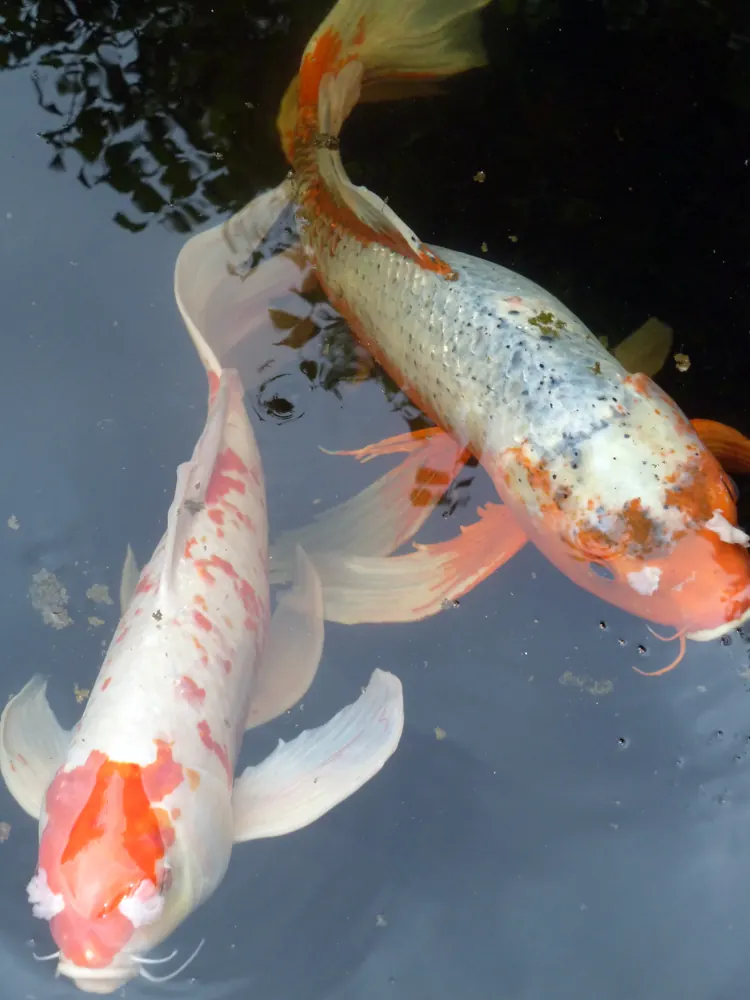



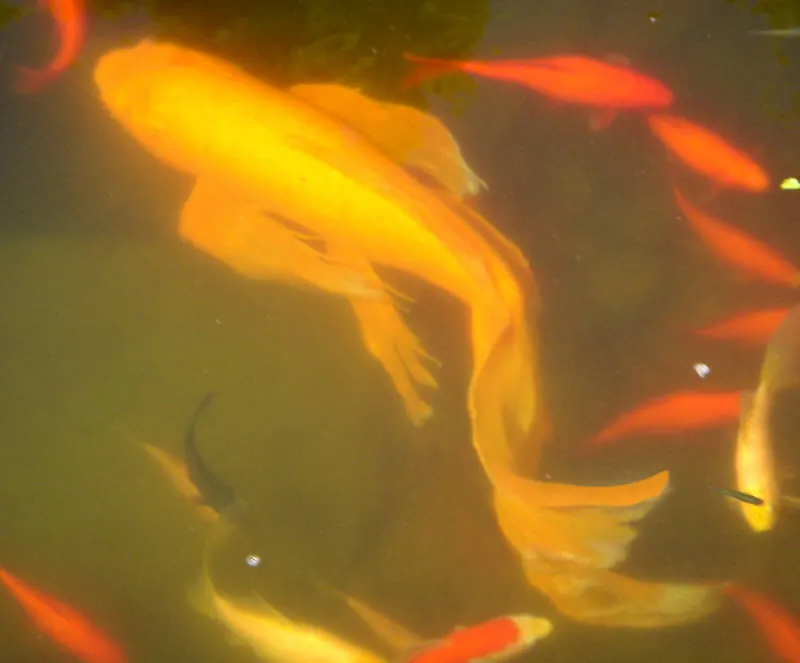

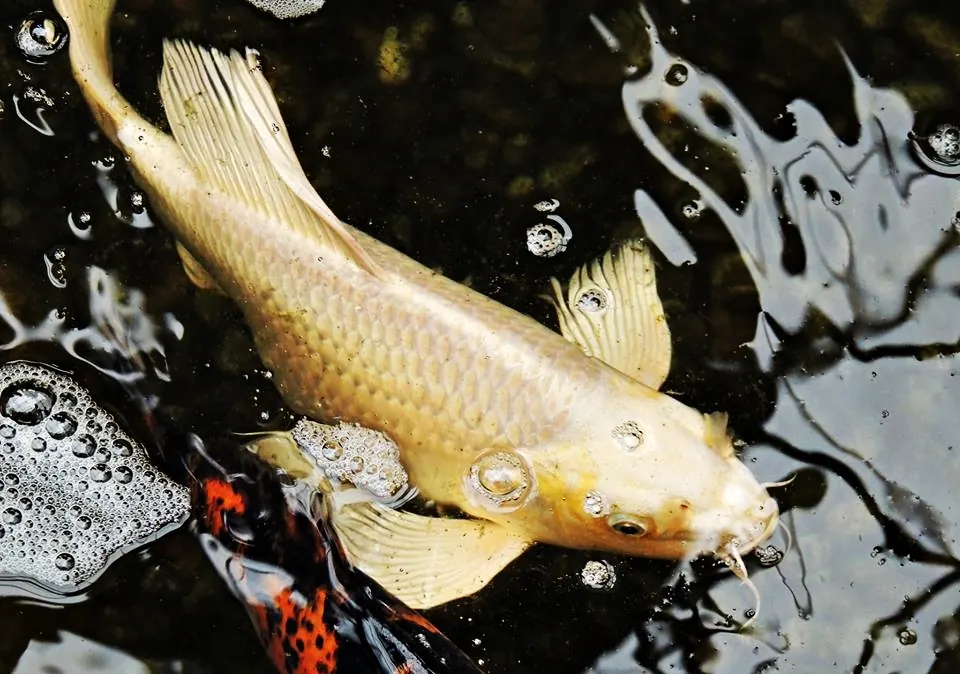

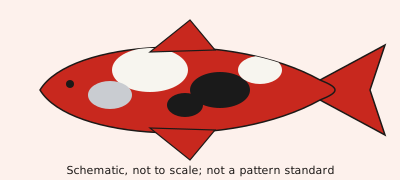
Common questions
What is a butterfly koi?
A butterfly koi (also called longfin koi, hirenaga, or dragon carp) is a koi notable for its elongated, flowing fins, developed from a cross involving a long-finned carp found in Indonesia[1].
Can butterfly koi be shown and judged like regular koi?
Are butterfly koi as valuable as standard koi?
According to the US dealer Kodama Koi Farm, butterfly koi are valued in the United States for their appearance but are not rated as highly in Japan or among traditional hobbyist circles[7].
Why are butterfly koi fins prone to damage?
Their long finnage is more prone to tearing, injury, and conditions such as fin rot compared with standard koi, especially in ponds with sharp objects or poor water quality[1].
Related koi topics
References
- ^ Butterfly koi (Wikipedia). Wikipedia. en.wikipedia.org/wiki/Butterfly_koi. Retrieved November 2026.
- ^ Koi (Wikipedia). Wikipedia. en.wikipedia.org/wiki/Koi. Retrieved November 2026.
- ^ Hirenaga - Koi For Sale - Kodama Koi Farm. Kodama Koi Farm (koi dealer). kodamakoifarm.com/variety/butterfly-hirenaga/. Retrieved November 2026.
- ^ Koi classification (ZNA 2021), NMZNA 2026 show documents. nmzna.net. nmzna.net/2026%20Show%20Docs/NMZNA%202026%20Koi%20Classification%20…. Retrieved November 2026.
- ^ JAS 0020 Nishikigoi. Vocabulary (MAFF) — Ministry of Agriculture, Forestry and Fisheries (Japan). maff.go.jp/j/jas/jas_standard/attach/pdf/index-536.pdf. Retrieved November 2026.
- ^ Koi (Wikipedia). Wikipedia. en.wikipedia.org/wiki/Ghost_koi. Retrieved November 2026.
- ^ How Much Do Koi Fish Cost? Koi Pricing Guide for USA. Kodama Koi Farm (koi dealer). kodamakoifarm.com/how-much-do-koi-fish-cost/. Retrieved November 2026.
- ^ AKJA Classifications – American Koi Judges Association (AKJA). American Koi Judges Association. akjajudges.com/akja_classifications/. Retrieved November 2026.