
Kikokuryu and Beni Kikokuryu
Key facts: Kikokuryu (輝黒竜) is a metallic, Doitsu-scaled koi variety derived from Kumonryu, displaying shiny platinum-type skin overlaid with shifting black (sumi) markings[1][2]. Beni Kikokuryu is a related form that adds scarlet (beni) imprints to the same metallic, black-marked body[3].
Colors:
Kikokuryu is described by the All Japan Nishikigoi Promotion Association (JNPA) as a variety whose whole body shines and which carries the appearance characteristics of Kumonryu, the black-and-white Doitsu carp known for its cloud-like ink pattern[3]. Beni Kikokuryu is the same but with scarlet imprints across the body, and Kin Kikokuryu carries golden imprints instead[3]. The Ministry of Agriculture, Forestry and Fisheries (MAFF) JAS vocabulary for Nishikigoi lists Beni Kikokuryu (紅輝黒竜) as a named example within the “hikari-kawarigoi” (光り変わり鯉) group — metallic koi that do not fit the twenty-two named base varieties but shine over the whole body[4][10].According to the US dealer Kodama Koi Farm, Kikokuryu was created by breeding Kumonryu (referred to in that source as Komonryu) and a Platinum koi, producing what the company calls “essentially a metallic Kumonryu” with shiny platinum skin and fins combined with deep sumi coloration[1]. The American Koi Judges Association (AKJA) glossary instead states the variety was developed by a breeder named Aoki, who crossed a Kumonryu with a Kikusui (referred to there as Kikisui)[2]. These accounts of its origin differ and should be treated as separate claims rather than a single confirmed history.- sumi (black)
- gin (silver)
- kin (gold)
- hi (red)
Name and meaning
According to Kodama Koi Farm, the name Kikokuryu translates to “metallic dragon,” describing a scaleless koi with a gunmetal gray or silver appearance[7]. The same source notes that neither Kikokuryu nor Kumonryu represents the mythical carp-to-dragon transformation of the Dragon Gate legend, but that their dragon-themed names preserve that symbolism in Japanese koi culture[7].Judging points
- Sumi should be strong and clearly divided from the platinum ground color, which is considered the ideal condition since sumi does not normally show well on platinum-colored skin[9].
- The lustrous metallic shine is considered more important to the variety's appeal than in non-metallic Kumonryu[1].
- Sumi should extend across the entire body, from head to tail section, which Kodama Koi Farm identifies as a key character trait distinguishing Kin Kikokuryu from the similar Kujaku[9].
- Pattern quality is judged alongside variety character; a koi with a lesser pattern but stronger expression of the variety's characteristic sumi may be preferred over one with better pattern but weaker character[9].
Origin and development
Sources differ on the exact origin of Kikokuryu. Kodama Koi Farm states it was created by breeding Kumonryu with a Platinum koi[1], while the AKJA glossary attributes its development to a breeder named Aoki, who crossed Kumonryu with Kikusui[2]. Both accounts agree the variety descends from Kumonryu stock.A documented later development is Kin Kikokuryu, created by the breeder Seiki Igarashi of Ojiya City, Niigata, who is also referenced by Wikipedia as having produced a metallic-skinned version of Kumonryu with a Kohaku-style hi pattern, with at least six genetic subvarieties recorded[11][9]. According to Kodama Koi Farm, Igarashi's Kin Kikokuryu drew attention at the Nogyosai show in Niigata in 2000 and traces its lineage through Magoi, Karasugoi, Hajiro, Doitsu Hajiro, Kumonryu and Kikokuryu[9]. Igarashi reportedly categorized his Kin Kikokuryu into six distinct types (A through F), ranging from Kikokuryu-type individuals to a non-metallic form he named “Momiji”[9].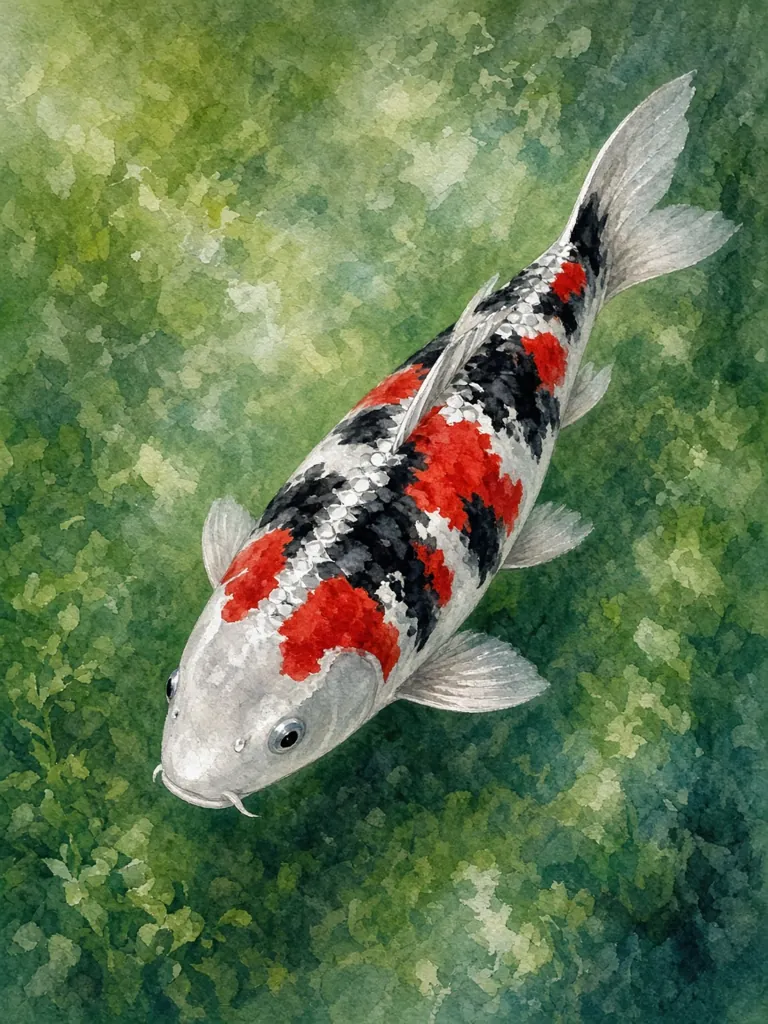
Appearance and the JAS standard
The JNPA describes Kikokuryu as having a whole-body shine combined with the appearance characteristics of Kumonryu[3]. The JNPA's entry for Kumonryu itself notes that the variety has a black ground color with white areas that increase during growth, producing a cloud-like black pattern, has the Doitsu (German carp) scale characteristic of almost no scales, and that the black pattern can change over short periods due to environmental changes, especially water temperature[8]. Kodama Koi Farm likewise states that, like Kumonryu, Kikokuryu is likely to change color through the year, sometimes showing hints of blue, with the change attributed to factors including lighting and water temperature[1]. The MAFF JAS vocabulary document defines “hikari-kawarigoi” (光り変わり鯉) as varieties not matching the other named categories that shine over the whole body, and lists Beni-kikokuryu as an illustrated reference example of this group[4].Beni Kikokuryu and Kin Kikokuryu
The JNPA defines Beni-kikokuryu as having a whole-body shine with scarlet imprints across the body, retaining the appearance characteristics of Kikokuryu, and defines Kin-kikokuryu as the same but with golden imprints instead of scarlet[3]. Kodama Koi Farm describes Beni Kikokuryu as rare and difficult to breed successfully, listing it among notably hard-to-produce varieties[12].According to Kodama Koi Farm's account of Igarashi's Kin Kikokuryu, the pattern seen on his fish consisted of a shining tan-colored hi pattern over Nezu Ogon-type skin, with sumi present across the entire body including the mouth, head and fins, a trait attributed to the variety's Karasugoi ancestry[9]. The source notes this combination of sumi and hi gives a distinguished, stout appearance, and that strong sumi dividing clearly from platinum ground color is considered an ideal trait, since sumi is said not to normally appear well on platinum-colored bodies[9].Classification at shows
- The ZNA's 2021 classification document places Kikokuryu under category 10, Kawarimono, alongside Kumonryu, Beni Kumonryu and other non-metallic/mixed varieties[5].Entry rules for the 59th ZNA International Koi Show instead list Kikokuryu under category 12, Hikarimono, together with Beni Kanoko[6].The AKJA glossary notes Kikokuryu as “a new exception” historically placed in the Kawarimono class, while observing that “it may change”[2].The ZNA SoCal 50th Annual Koi Show registration packet places Kikokuryu under “Hikari Moyomono,” described as metallics with patterns, alongside Hariwake[13].Under the JAS system, Kikokuryu and Beni Kikokuryu fall under the broader "hikari-kawarigoi" (光り変わり鯉) group for metallic koi not matching the other defined varieties[4].
Differences from similar varieties
Kikokuryu is distinguished from non-metallic Kumonryu primarily by its shine: both share the Doitsu scale type and shifting black cloud-like pattern, but Kikokuryu additionally carries metallic platinum-type skin[1][8]. Kodama Koi Farm notes that in later type (E) Kin Kikokuryu, the pattern can resemble Kujaku, but the presence of sumi across the entire body, including the head and tail section, is the distinguishing clue between the two[9].Scale form
Kikokuryu derives its scale characteristic from Kumonryu, which the JNPA states has the appearance characteristics of Doitsugoi, meaning almost no scales are present and the skin is largely exposed[8]. Kodama Koi Farm similarly describes Kikokuryu as scaleless with metallic skin[7].Images
Common questions
What is the difference between Kikokuryu and Kumonryu?
What is Beni Kikokuryu?
Is Kikokuryu a Kawarimono or a Hikarimono?
Who created Kin Kikokuryu?
Why does the black pattern on Kikokuryu change over time?
Related koi topics
References
- ^ Kikokuryu - Koi For Sale - Kodama Koi Farm. Kodama Koi Farm (koi dealer). kodamakoifarm.com/variety/kikokuryu/. Retrieved November 2026.
- ^ Glossary – American Koi Judges Association (AKJA). American Koi Judges Association. akjajudges.com/glossary/. Retrieved November 2026.
- ^ Kawarigoi - Variety - All Japan Nishikigoi Promotion Association. All Japan Nishikigoi Promotion Association. jnpa.info/en/nishikigoi/varieties/type/kawarigoi/. Retrieved November 2026.
- ^ JAS 0020 revision notice, 2026 (MAFF). Ministry of Agriculture, Forestry and Fisheries (Japan). maff.go.jp/j/jas/jas_kikaku/attach/pdf/kokujikaisei-733.pdf. Retrieved November 2026.
- ^ Koi classification (ZNA 2021), NMZNA 2026 show documents. nmzna.net. nmzna.net/2026%20Show%20Docs/NMZNA%202026%20Koi%20Classification%20…. Retrieved November 2026.
- ^ 59th ZNA International Koi Show entry rules (ZNA). Zen Nippon Airinkai. zna.jp/wp-content/uploads/2023/07/59th-zna-koishow.pdf. Retrieved November 2026.
- ^ The Koi Dragon Legend: The Myth of the Dragon Gate. Kodama Koi Farm (koi dealer). kodamakoifarm.com/koi-dragon-legend/. Retrieved November 2026.
- ^ Kumonryu - Variety - All Japan Nishikigoi Promotion Association. All Japan Nishikigoi Promotion Association. jnpa.info/en/nishikigoi/varieties/type/kumonryu/. Retrieved November 2026.
- ^ Kin Kikokuryu: The sensational new variety. Kodama Koi Farm (koi dealer). kodamakoifarm.com/sensational-variety-kin-kikokuryu/. Retrieved November 2026.
- ^ JAS 0020 Nishikigoi. Vocabulary (MAFF) — Ministry of Agriculture, Forestry and Fisheries (Japan). maff.go.jp/j/jas/jas_standard/attach/pdf/index-536.pdf. Retrieved November 2026.
- ^ Koi (Wikipedia). Wikipedia. en.wikipedia.org/wiki/Utsurimono. Retrieved November 2026.
- ^ Which Koi is the Rarest: How Can I Judge Superiority?. Kodama Koi Farm (koi dealer). kodamakoifarm.com/rarest-koi-fish/. Retrieved November 2026.
- ^ ZNA SoCal 50th Annual Koi Show exhibitor registration packet (2026). znasocal.org. znasocal.org/wp-content/uploads/2026/02/2026-entrant-registration-1…. Retrieved November 2026.